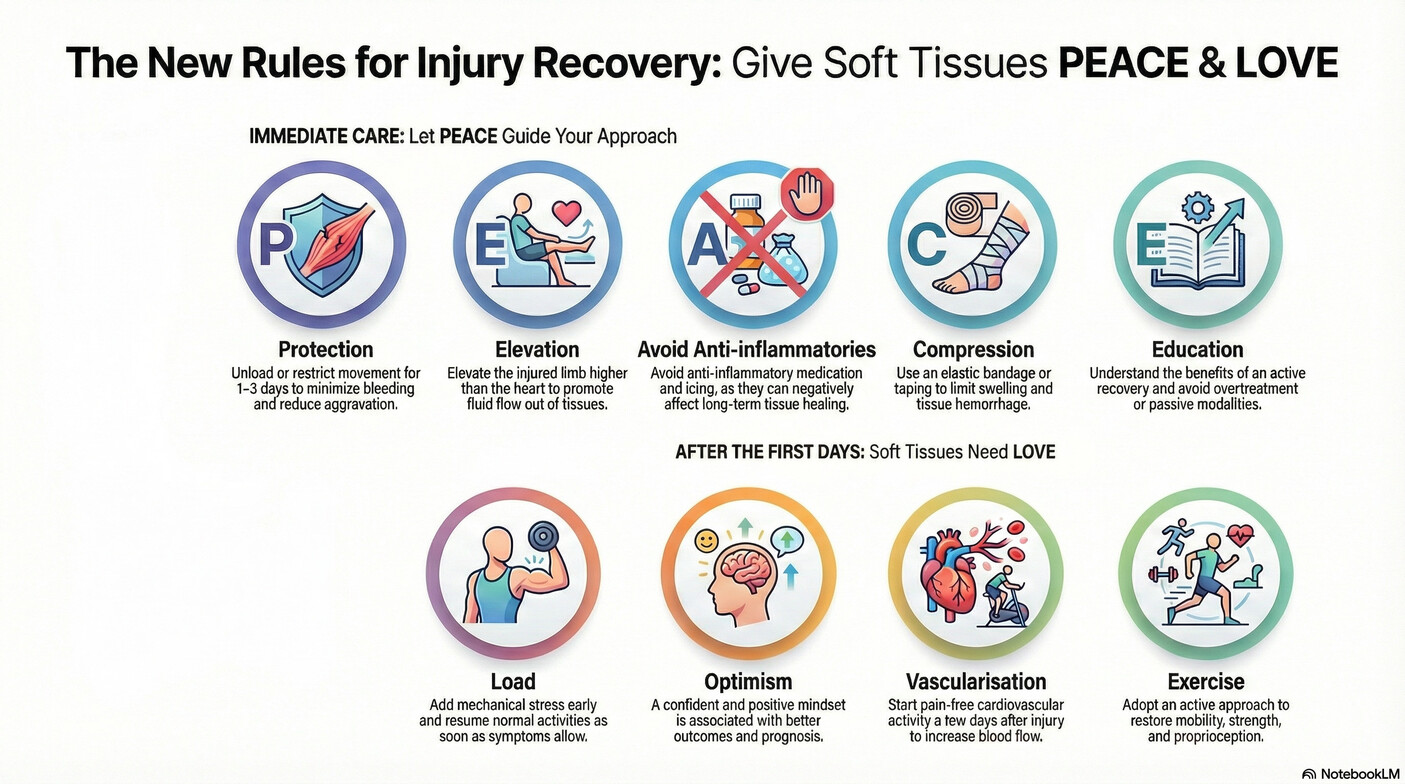
For decades, the freezer-bound habits of athletes and the ubiquitous blue gel pack have been the unquestioned first responders to any soft-tissue injury. If you’ve ever rolled an ankle or strained a hamstring, you likely performed the RICE ritual—Rest, Ice, Compression, and Elevation—before you even left the field. But as an evidence-based journalist, I’ve seen the tide turning. The "Ice Age" of rehabilitation is thawing, replaced by a more sophisticated, biological approach. We are moving beyond simple damage control and toward a holistic framework known as PEACE & LOVE. This isn’t just a catchy acronym; it’s a roadmap that guides a self-healing athlete from the moment of impact through the weeks of subacute recovery.
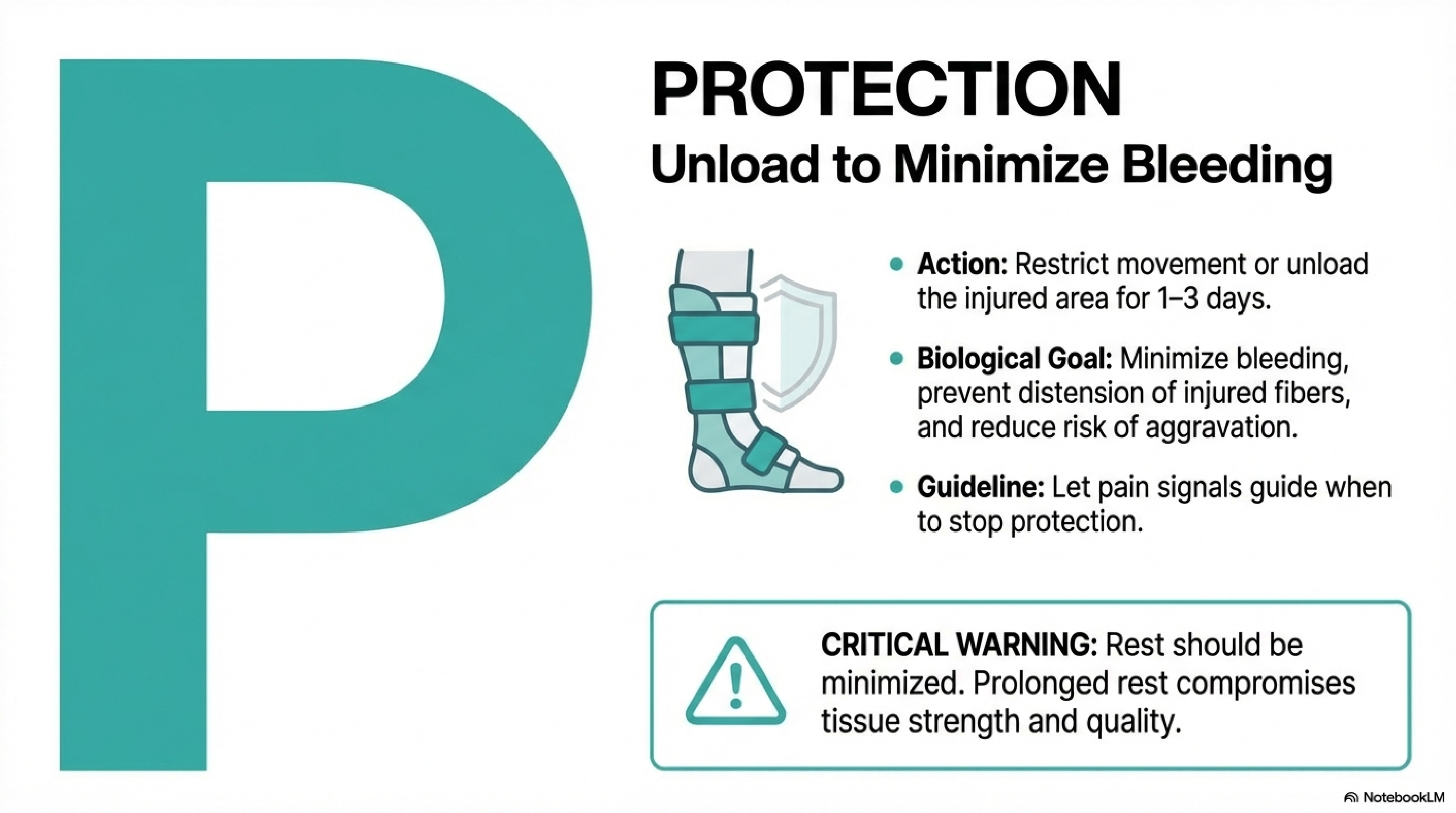
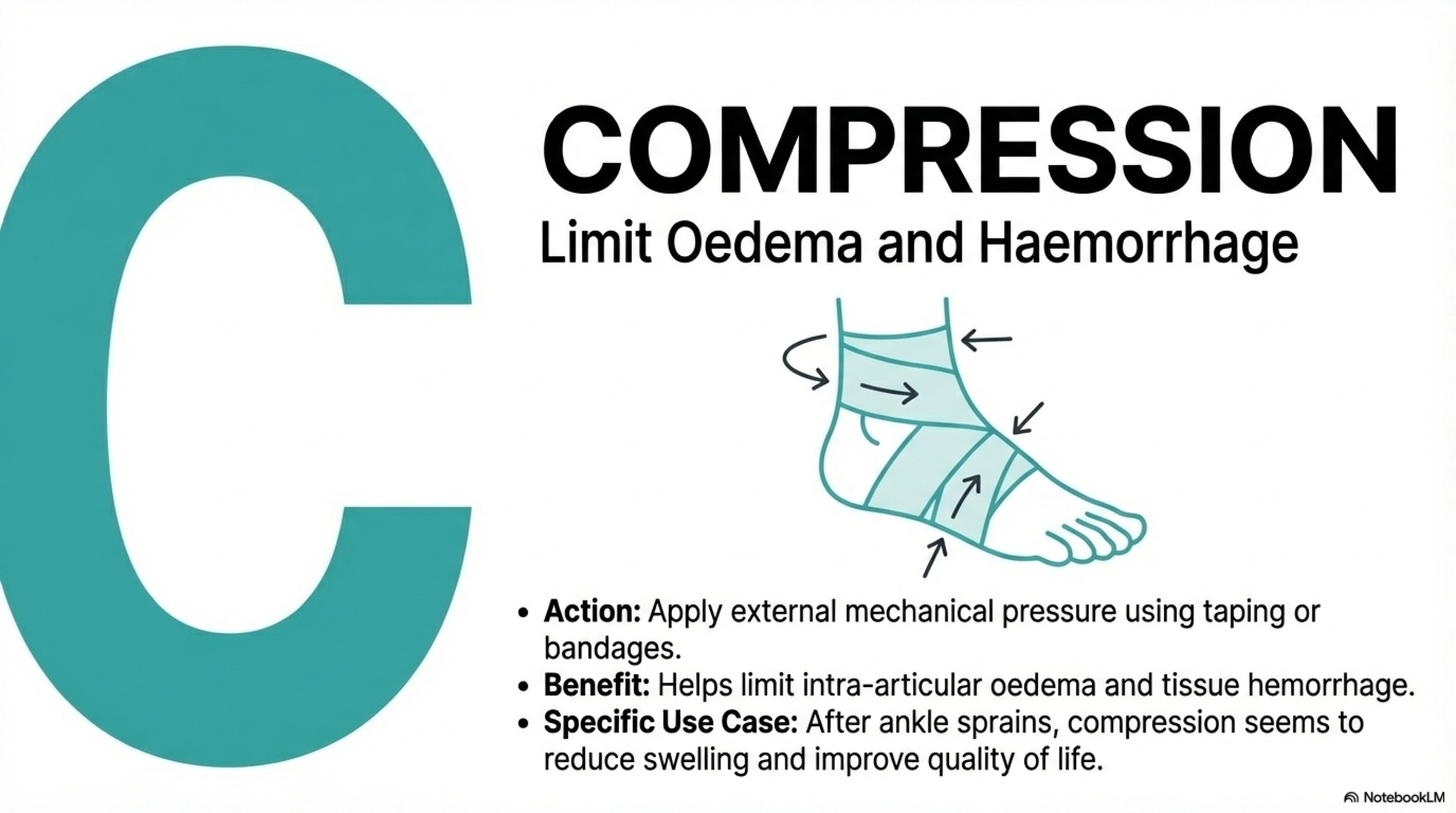
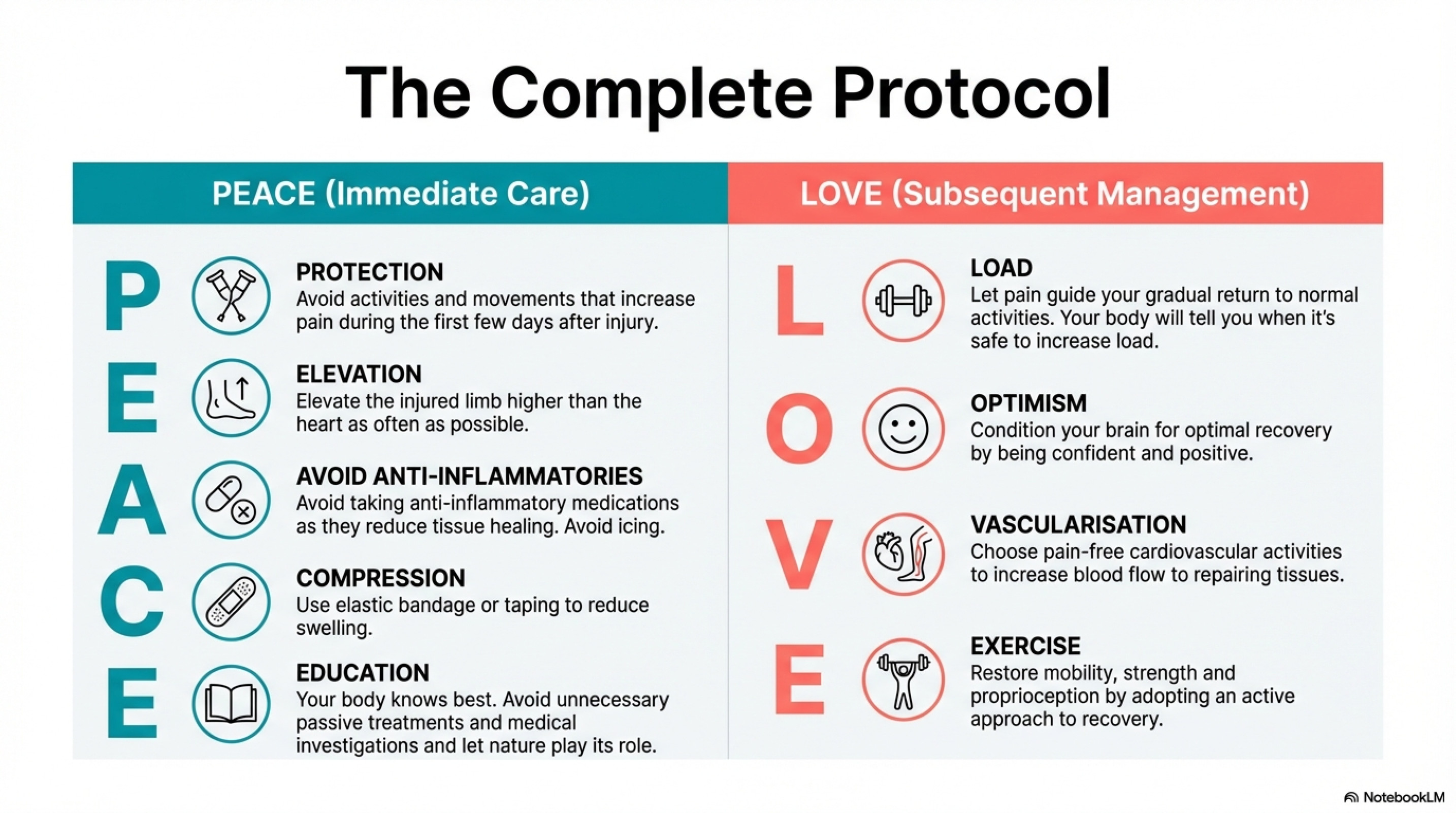
To give your body the best chance, the first three days are about letting PEACE guide your approach. This begins with Protection, where you unload or restrict movement for one to three days to minimize bleeding and prevent distension of injured fibers. You follow this with Elevation, keeping the limb higher than the heart to promote fluid flow, and Compression, using taping or bandages to limit tissue hemorrhage and edema. However, it is the "A" and the "E" of this acronym—Avoidance and Education—where the most radical and necessary shifts in our recovery habits must occur.
The Surprising Truth About Anti-Inflinflammatories and Ice
The "A" in PEACE stands for Avoid anti-inflammatory modalities. For many active individuals, reaching for ibuprofen is a reflex designed to "feel better" as quickly as possible. However, there is a profound difference between feeling better and actually getting better. Inflammation is not a mistake; it is a necessary biological process that repairs damaged soft tissues. By inhibiting this response with high doses of anti-inflammatories, you may be sabotaging your long-term tissue quality.
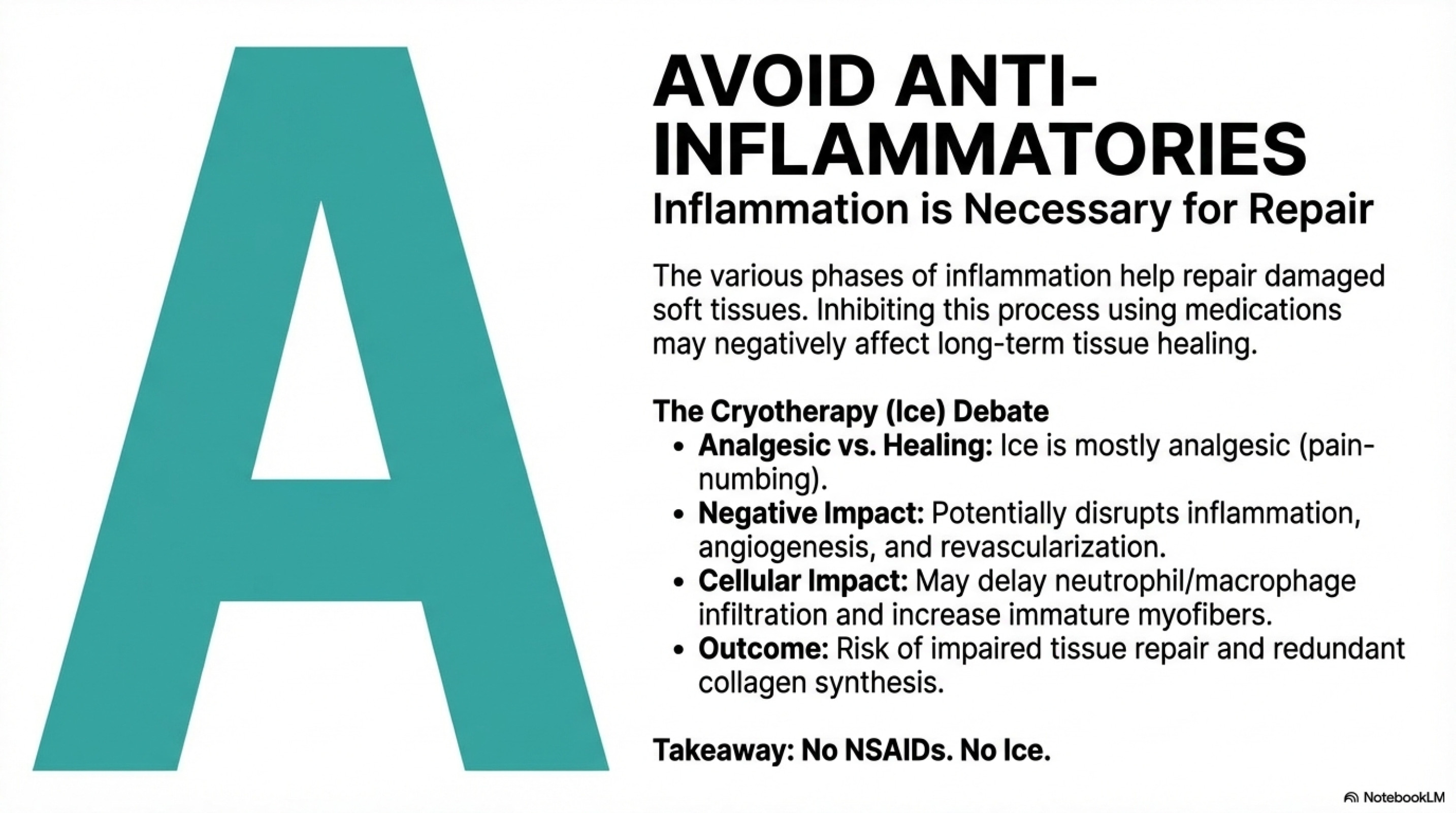
This shift moves us away from blocking pain and toward supporting biology. The same caution applies to cryotherapy. While ice provides a welcome numbing effect, the scientific evidence for its efficacy in tissue repair is remarkably thin. In fact, icing may disrupt angiogenesis (the formation of new blood vessels) and revascularization. By delaying the infiltration of necessary repair cells (neutrophils and macrophages), you risk increasing the presence of immature myofibres and promoting redundant collagen synthesis. Essentially, you might be trading a few minutes of numbing for a slower, less efficient healing process.
"Standard of care for soft-tissue injuries should not include anti-inflammatory medications."
Why Passive Treatments Can Be Counterproductive
Education (the "E" in PEACE) is perhaps the most underrated tool in a recovery kit. In the immediate aftermath of an injury, many of us find ourselves "chasing the magic cure," seeking out passive modalities like electrotherapy, manual therapy, or acupuncture. While these can feel good in the moment, they often have insignificant effects on long-term function compared to an active approach.
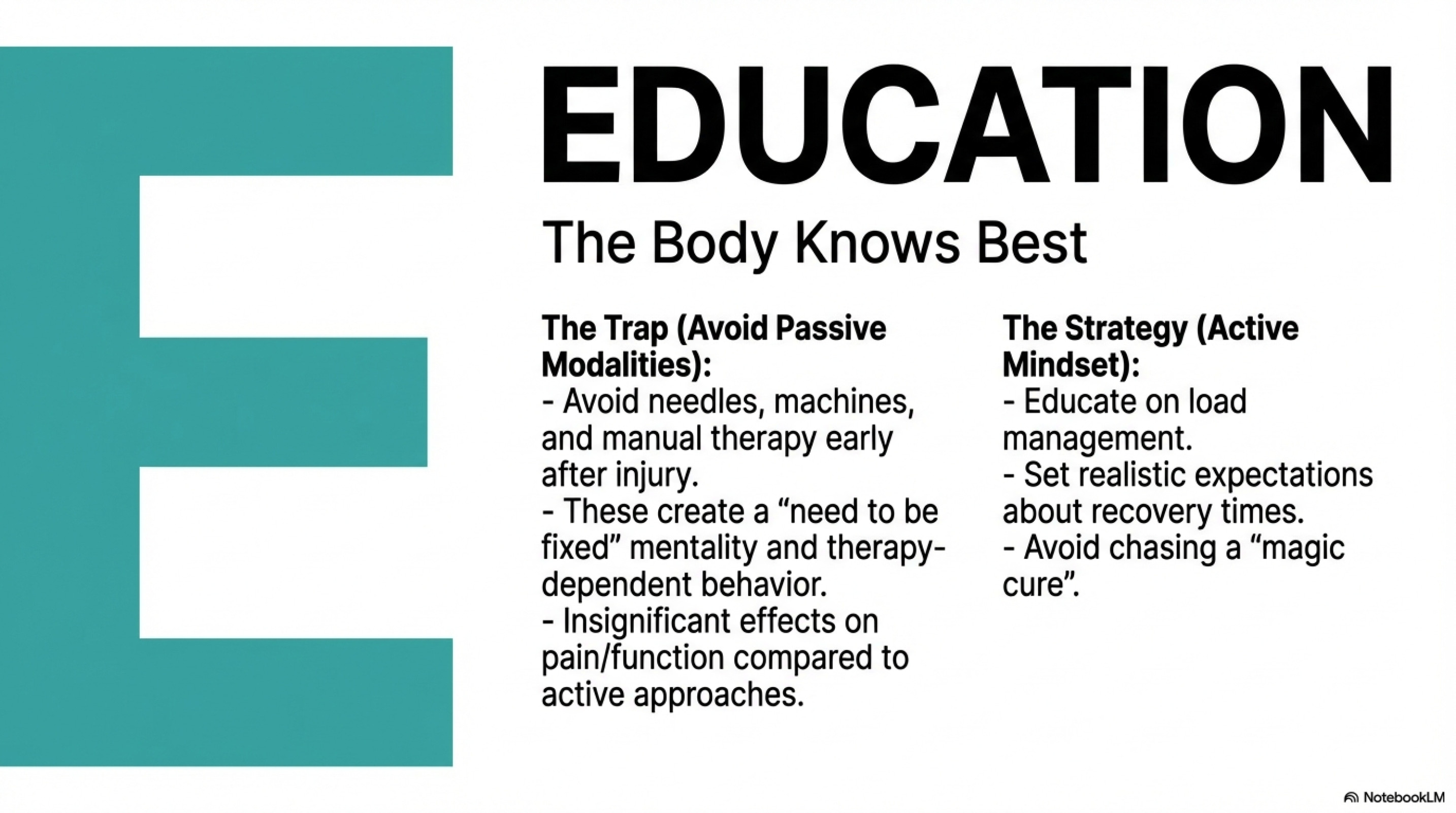
Worse yet, relying on a therapist to "fix" you can nurture an external locus of control, creating a therapy-dependent loop. True recovery comes from understanding your condition and managing your load. High-quality education helps athletes avoid over-medicalization, such as unnecessary injections or surgery. On a broader scale, this shift toward self-management and realistic expectations even impacts healthcare costs by reducing disability compensation and unnecessary medical investigations.
The Shift from "Rest" to "Optimal Loading"
After the first 72 hours have passed, the "Immediate Care" phase ends and the "Subsequent Management" begins. This is where your recovery needs LOVE. The "L" stands for Load, representing a sharp departure from the old "total rest" philosophy. While protection is necessary in the first few days, prolonged rest is detrimental, compromising tissue strength and quality.
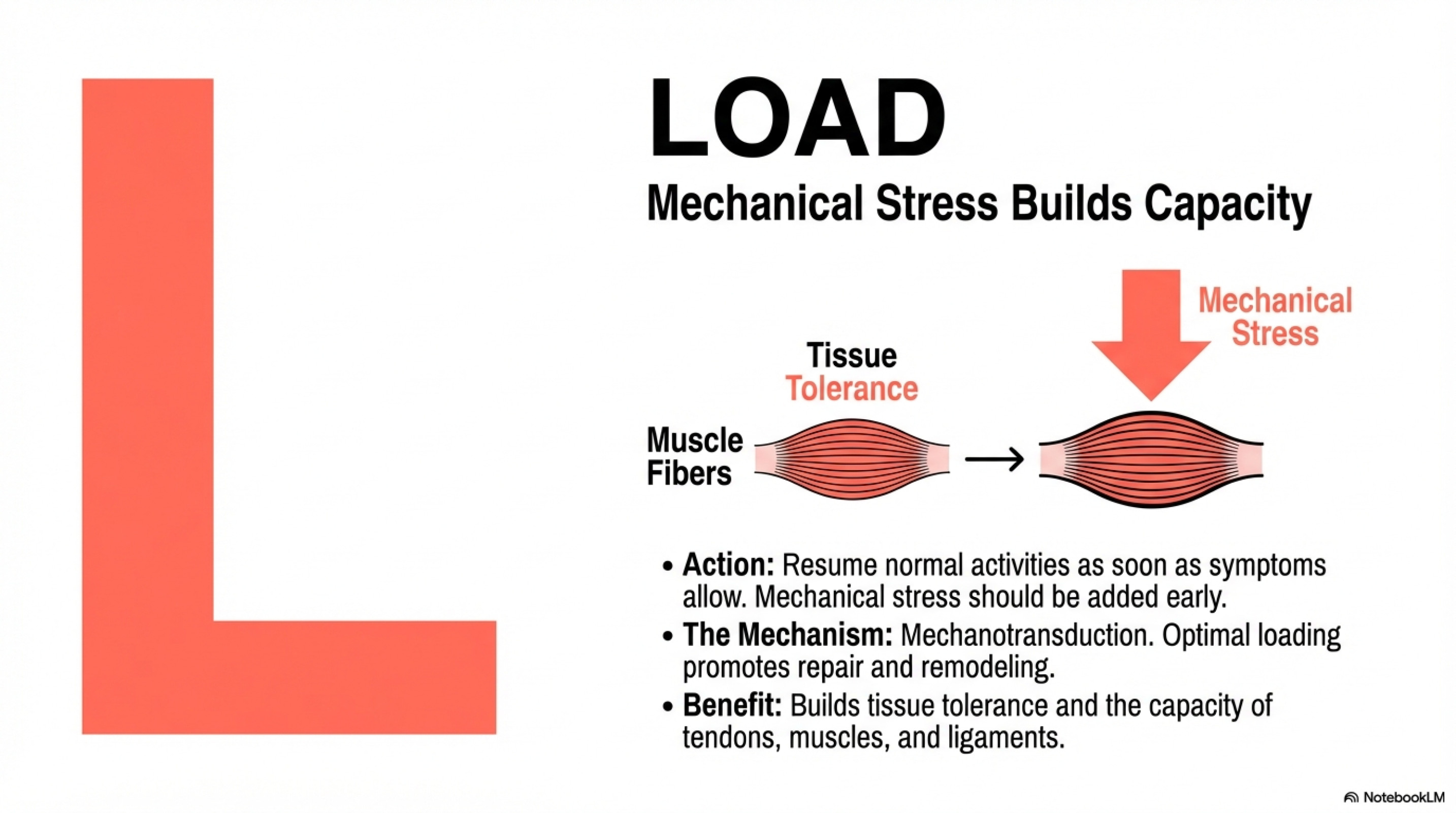
The key is "optimal loading" through a process called mechanotransduction, where mechanical stress promotes tissue remodeling. In this phase, your body becomes your best coach: pain signals should guide the cessation of protection and the gradual return to normal activities. By adding controlled stress without exacerbating pain, you build the capacity of your tendons, muscles, and ligaments to tolerate the demands of your sport once again.
Healing is a Mind-Body Experience
Physical recovery does not happen in a vacuum; it is influenced by the "O" in LOVE: Optimism. Our psychological state can be just as influential as the physical severity of the injury. When a self-healing athlete falls into the traps of catastrophizing, depression, or fear of movement, those emotions become physical barriers to repair.
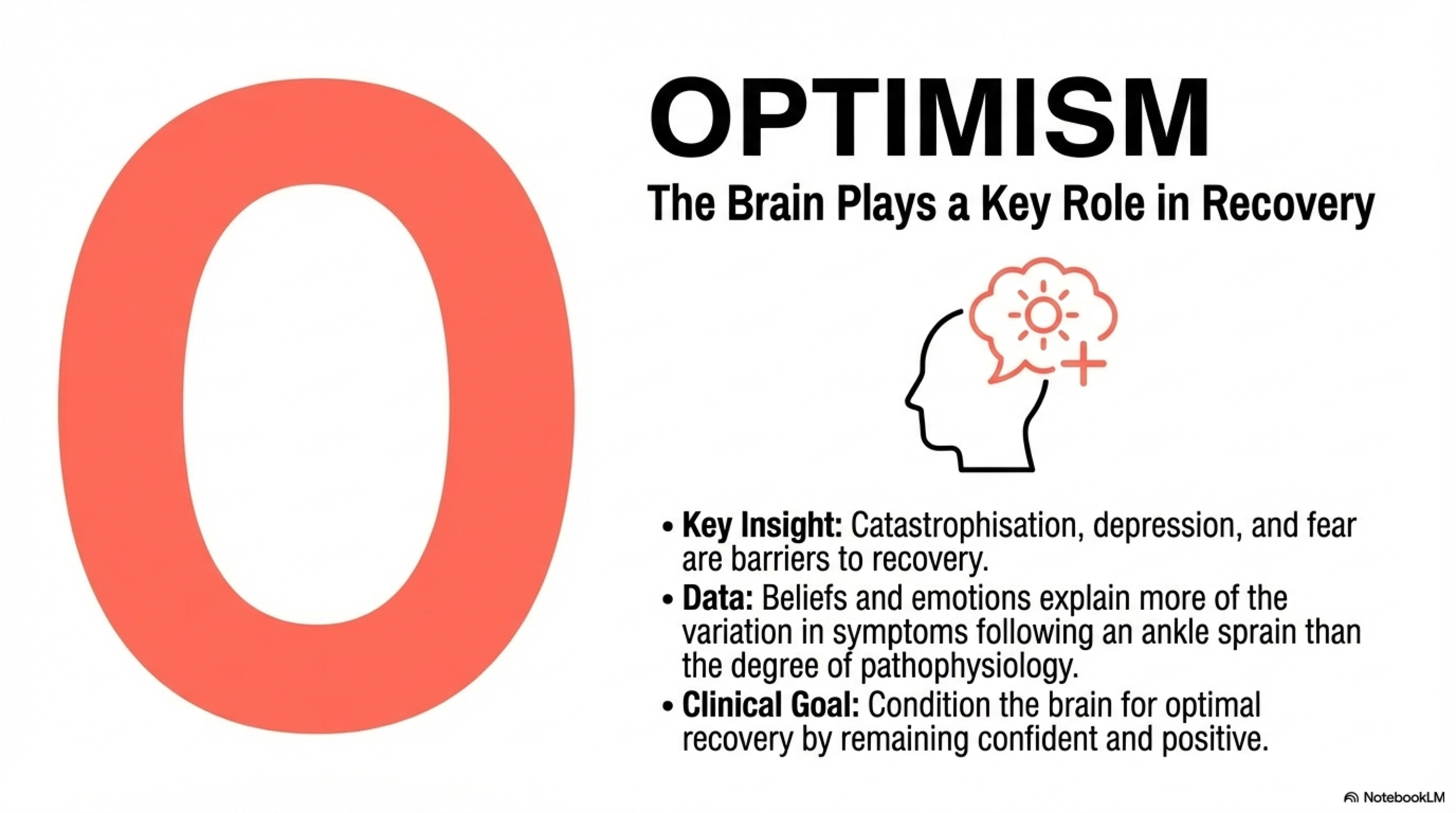
"Beliefs and emotions are thought to explain more of the variation in symptoms following an ankle sprain than the degree of pathophysiology."
By conditioning the brain to remain confident and positive, you are literally setting the stage for better clinical outcomes and a faster prognosis.
Choosing Vascularization over Medication
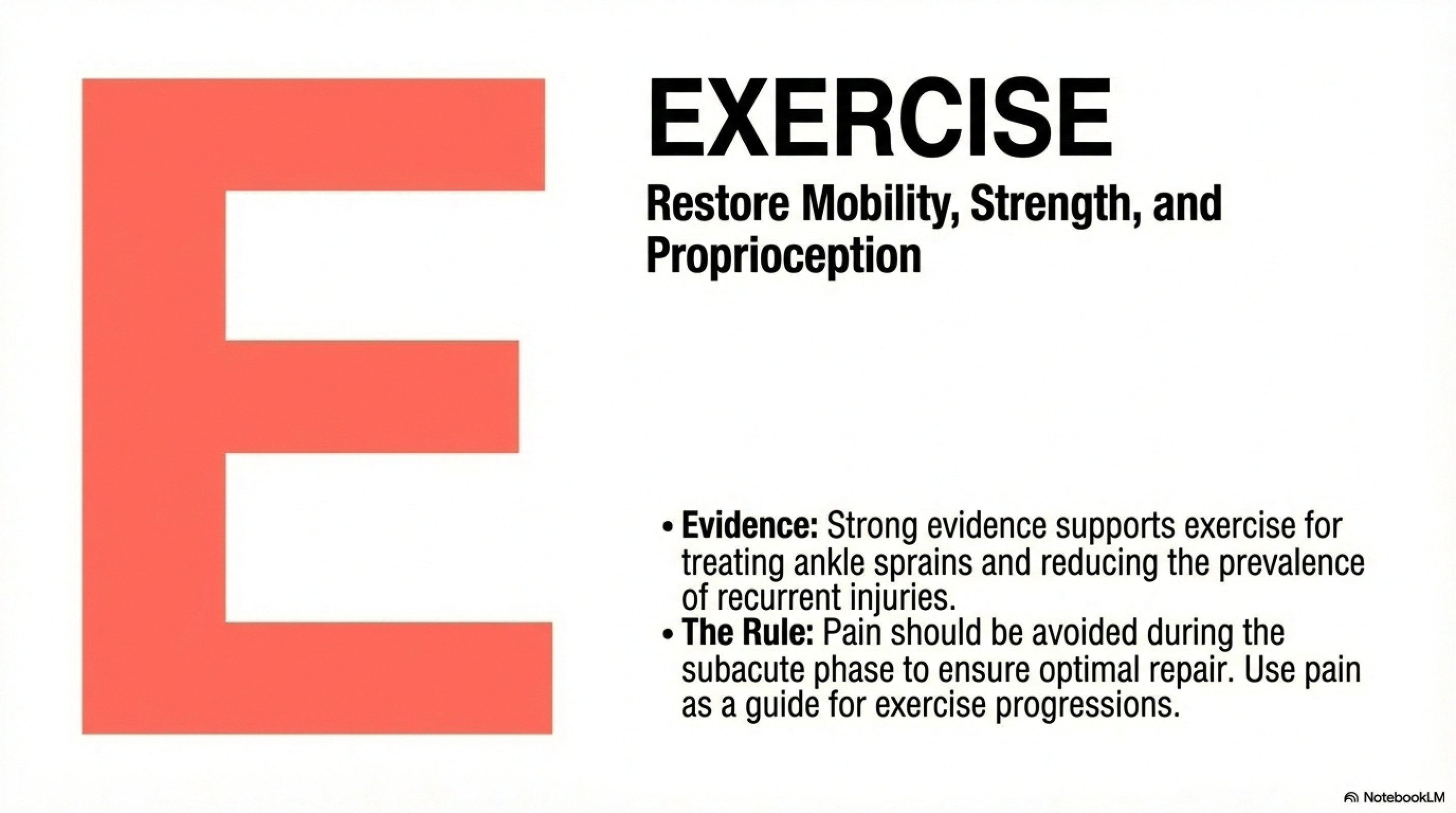
The final stages of the LOVE framework focus on vascularization ("V") and Exercise ("E"). A few days after the initial injury, pain-free aerobic exercise should become a cornerstone of your routine. Cardiovascular activity boosts motivation and increases vital blood flow to the repairing structures.
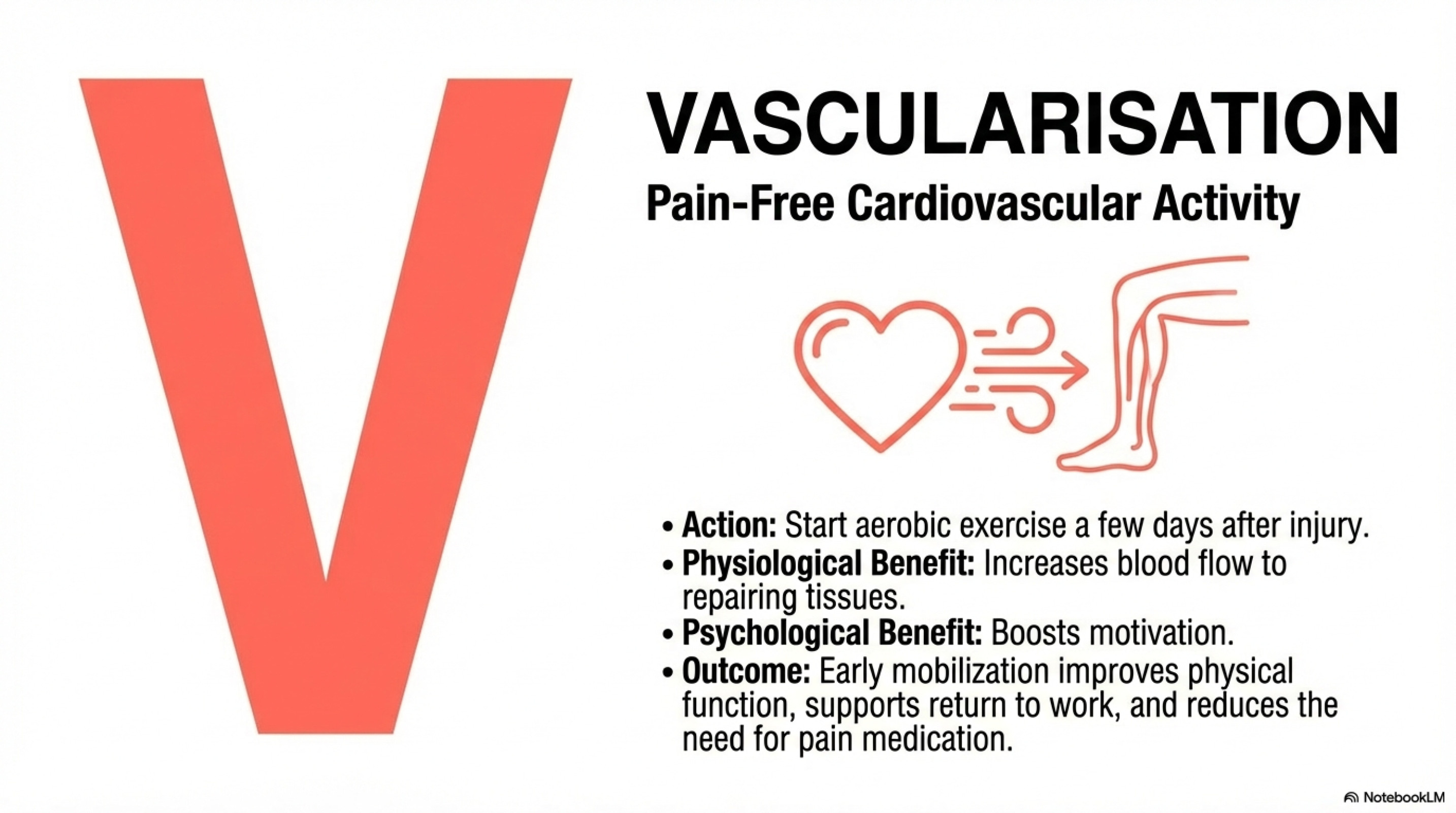
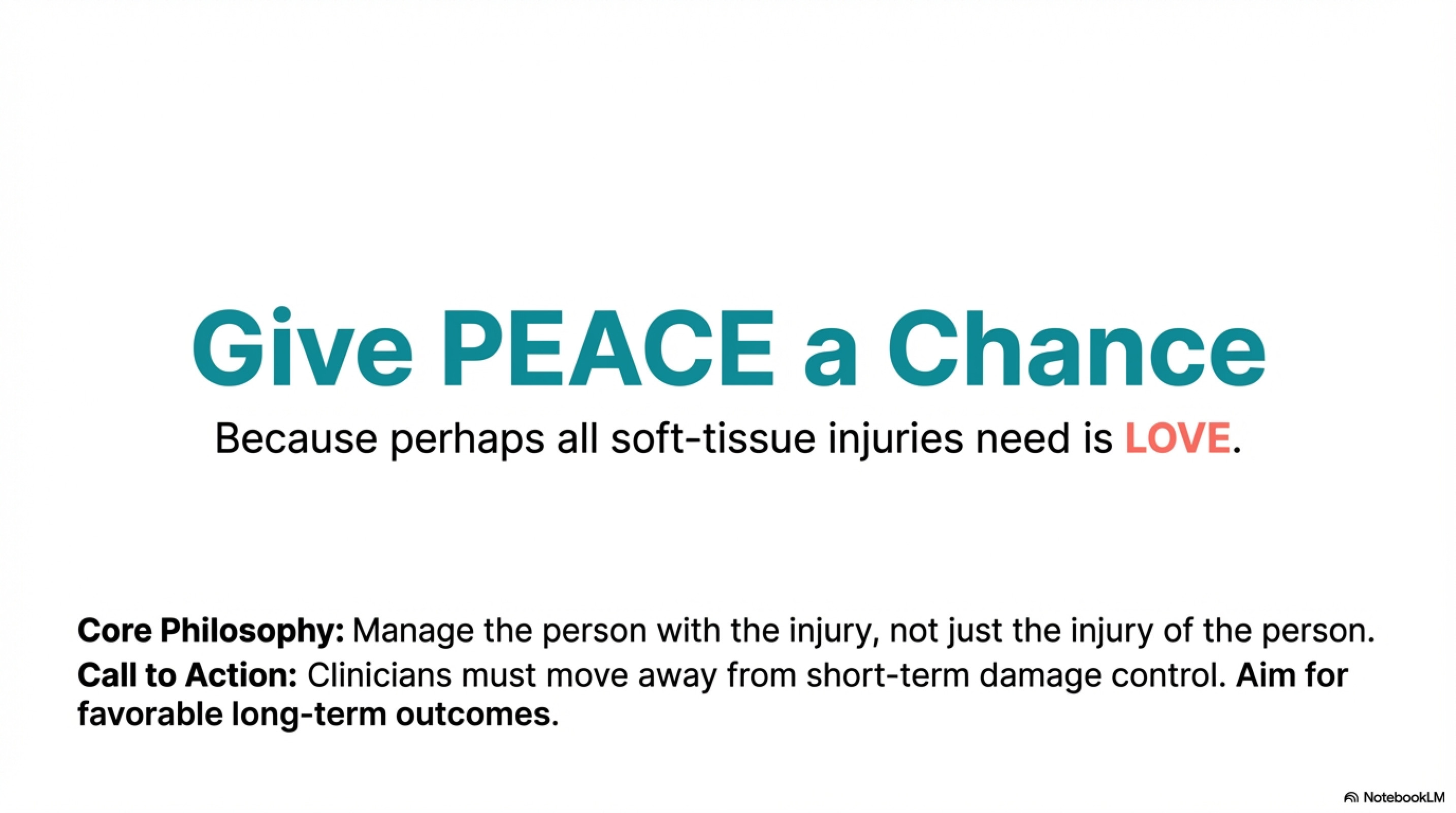
This active approach is about treating the "person with the injury" rather than just the "injury of the person." Engaging in early mobilization and aerobic activity has been shown to reduce the need for pain medication and accelerate a return to work or sport. Furthermore, targeted exercises restore mobility, strength, and proprioception—your body’s ability to sense its position in space. This is the secret to not just healing today's sprain, but preventing the recurrence that so often plagues active individuals.
Conclusion: Giving PEACE a Chance
The transition from the RICE era to the PEACE & LOVE model marks a fundamental shift from short-term symptom suppression to a commitment to long-term tissue health. By respecting the body’s inflammatory signals and prioritizing movement and mindset over the freezer and the medicine cabinet, we ensure a more durable recovery.
The next time you’re sidelined by a strain, will you reach for the freezer, or will you choose to give your body the "PEACE and LOVE" it actually needs to heal?